
Support planned maintenance
Prepare and support specified tasks on machines and equipment using existing maintenance plans. Access, shutdown windows, spare parts and responsibilities are clarified before deployment.
Planned maintenance, recurring faults or an upcoming restart: Reger Engineering supports your maintenance team with agreed technical work packages and a traceable handover.
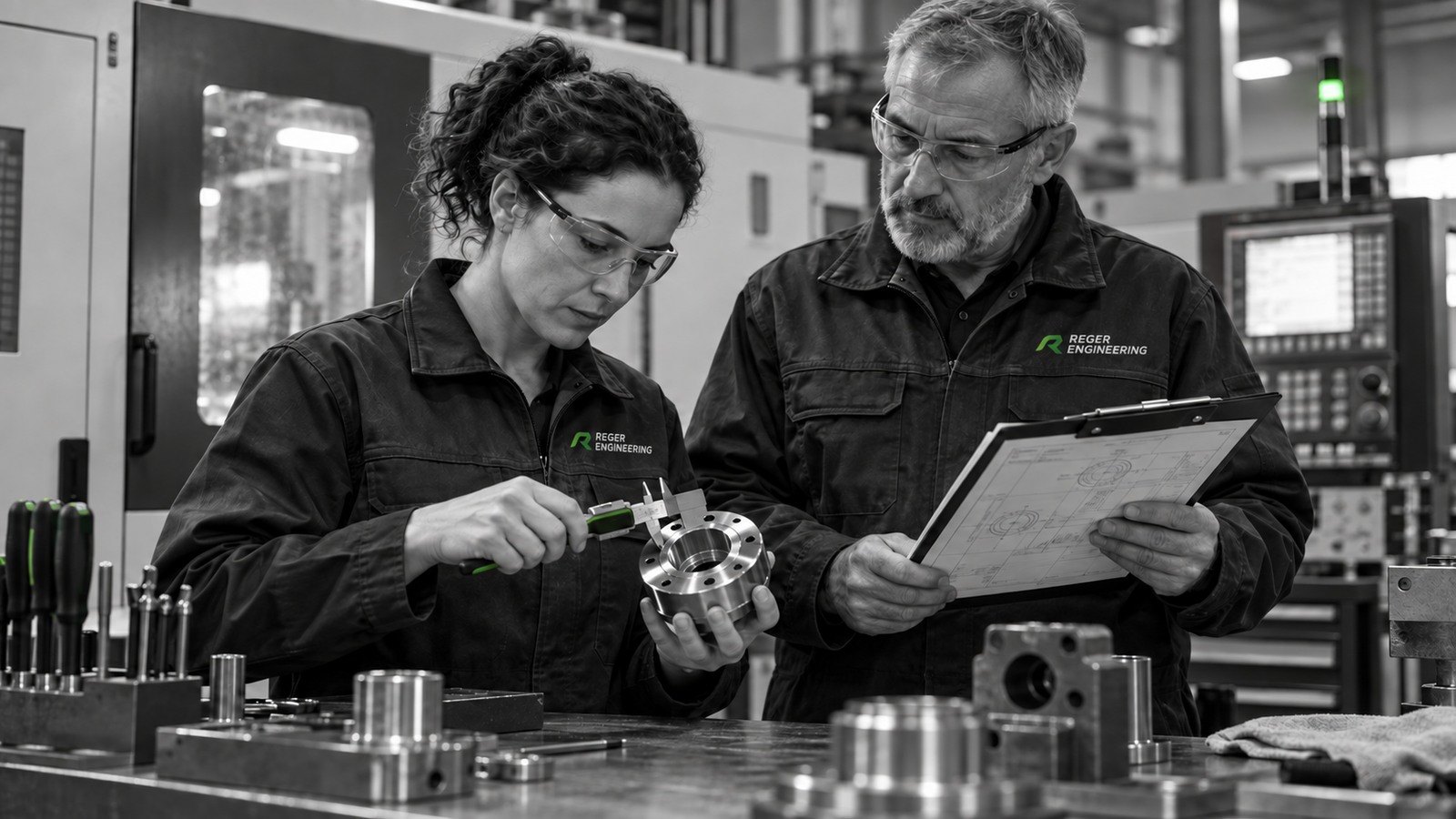
Equipment can stop for different reasons. Wear, an incorrect setting and an implausible sensor signal each require a different approach. We review observations, existing maintenance records and operating conditions with your team. These inform the next checks and the agreed maintenance scope.
Prepare and support specified tasks on machines and equipment using existing maintenance plans. Access, shutdown windows, spare parts and responsibilities are clarified before deployment.
Record symptoms, consider mechanical and electrical interfaces and investigate possible causes through agreed checks. Observations and actions are documented separately.
After maintenance or technical changes, check the equipment condition and agreed functions together. Observations, remaining work and approvals are recorded for the operating team.
Equipment condition, previous observations and available documentation form the basis.
Checks, resources and shutdown windows are agreed with production and maintenance.
Results, outstanding issues and agreed next steps are handed over to your team.
Reger Engineering is based in Usingen. For projects in Germany, the EU and worldwide, we agree location, timeframe, qualifications and availability individually.
We work under service and work contracts. Work packages, responsibilities and handover criteria are agreed before deployment.
About Reger and our referencesYes. You can request assistance for a scheduled maintenance window. An early description of tasks, qualifications, spare parts and timings helps deployment planning. Availability and scope are confirmed in advance.
Maintenance focuses on the intended equipment condition and operation. Process optimisation also examines workflows, bottlenecks and opportunities for improvement. The two can complement each other, but each needs a defined objective.
Describe when the fault occurs and under which conditions. Photos, error messages, current circuit diagrams and previous actions help us understand the task. Confidential documents are arranged directly with you.
Describe the task, location and timeframe. We will review suitable support and agree the next steps with you.